Why Lucky Block is blocked by Australian ISPs
 Available in AU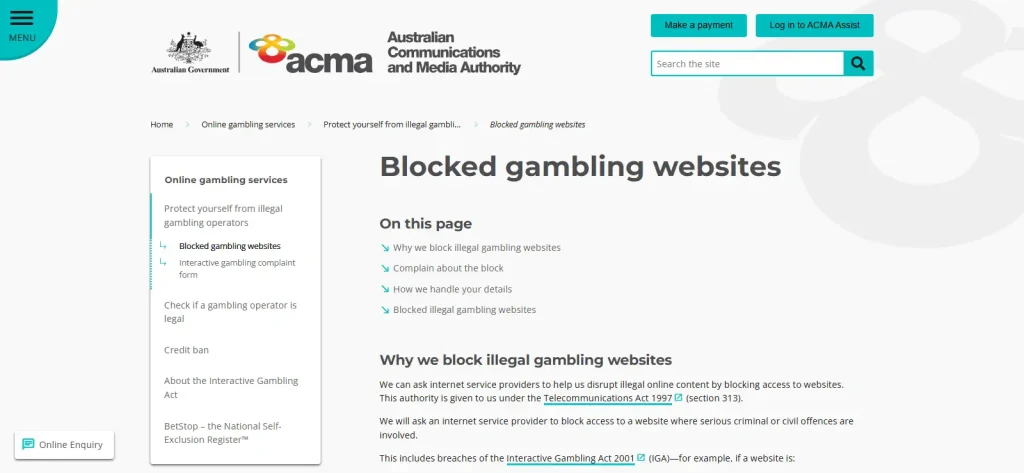
Lucky Block can be blocked on Australian internet connections because ACMA requested ISPs to block the service after its investigation found breaches of the Interactive Gambling Act 2001. ACMA announced the Lucky Block blocking request on 17 October 2024. The regulator uses website blocking as an enforcement and disruption measure against illegal online gambling services. Its current blocked-sites guidance says it can ask ISPs to block access under section 313 of the Telecommunications Act 1997 where serious criminal or civil offences are involved, including breaches of the Interactive Gambling Act.
Table of Contents
- ACMA linked Lucky Block to breaches of the Interactive Gambling Act
- ACMA asks internet service providers to disrupt access
- A blocked site is a regulatory signal, not a product review
- What an Australian website block does not establish by itself
- Use the regulator record instead of guessing from a browser error
- Why the casino category matters more than the connection error
- What the blocking sequence tells an Australian reader
- Why different connections can produce different technical symptoms
- How blocking fits with the wider enforcement record
- How to interpret an Australian website block
ACMA linked Lucky Block to breaches of the Interactive Gambling Act
ACMA’s October 2024 announcement says it requested Australian ISPs to block Lucky Block and Rooli after investigations found those services operating in breach of the Interactive Gambling Act. This was not presented as a routine geolocation choice made by the casino. It was a regulator-led disruption action aimed at illegal online gambling services.
The separate ACMA formal warning provides the brand-specific background. It records Igloo Ventures SRL as the provider of Lucky Block during the investigation and states that ACMA found the service was provided to customers physically present in Australia as a prohibited and unlicensed regulated interactive gambling service.
For the wider legal position, see is Lucky Block legal in Australia, including the regulator finding, online-casino category and advertising rules. Website blocking is one part of that record.
ACMA asks internet service providers to disrupt access
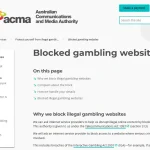
ACMA’s blocked gambling websites page explains that it can ask internet service providers to help disrupt illegal online content by blocking access to websites. The authority for that process comes from section 313 of the Telecommunications Act 1997. ACMA says it uses the mechanism where serious criminal or civil offences are involved.
For gambling websites, ACMA gives examples that include providing prohibited interactive gambling services to customers in Australia, providing unlicensed regulated interactive gambling services to Australian customers, and publishing advertisements for those services in Australia. Lucky Block’s recorded enforcement history falls within that broader regulatory framework.
An ISP block is therefore best understood as a network-level enforcement measure. It does not mean the website has necessarily been deleted from the internet or that the operator has stopped running the service in every country. It means Australian ISPs have been asked to disrupt access to the identified site as part of ACMA’s enforcement action.
The October 2024 Lucky Block announcement records the brand-specific blocking request, while ACMA’s current blocked-gambling page explains the mechanism used for illegal gambling websites.
A blocked site is a regulatory signal, not a product review
It reflects enforcement
ACMA requested the Lucky Block block after an investigation found the service operating in breach of the IGA.
It is country-specific
The Australian ISP action concerns access from Australia. It does not describe the service’s status in every other jurisdiction.
It does not describe features
The presence of a block says nothing about the size of a game catalogue, crypto support, app design or customer-service features.
What an Australian website block does not establish by itself
A block should not be stretched into claims that the regulator did not make. It does not tell a reader that Lucky Block has ceased operating worldwide, that every domain associated with the brand will always resolve in the same way, or that every technical error is caused by ACMA action. DNS errors, maintenance, browser problems and other network issues can produce superficially similar symptoms.
It also should not be used as a substitute for the underlying legal record. The stronger evidence is the combination of ACMA’s brand-specific enforcement finding, its blocking announcement and its explanation of the Australian rules. That evidence explains why the block exists instead of merely observing that a page did not load.
Use the regulator record instead of guessing from a browser error
- Check ACMA’s blocked gambling websites material. The regulator maintains public information about why gambling websites are blocked.
- Check the brand-specific announcement. ACMA named Lucky Block in its 17 October 2024 blocking announcement.
- Check the underlying enforcement record. The formal warning identifies the provider and the breaches ACMA found.
- Keep product features separate. Games, payments and support may explain the platform, but they do not reverse or replace the Australian enforcement record.
Why the casino category matters more than the connection error
ACMA’s current Interactive Gambling Act guidance identifies online casinos as banned online services for people in Australia. That category-level rule gives context to the Lucky Block enforcement record. It explains why the site-blocking action should be read as part of a broader Australian regulatory system rather than as an isolated dispute between an ISP and a website.
The companion online casino Australia legal guide explains the distinction between prohibited online casino services and regulated wagering categories in more detail. That distinction helps prevent a common mistake: assuming that because some forms of online wagering can be offered by licensed operators, every online gambling product is treated the same way.
What the blocking sequence tells an Australian reader
The public record is useful because it shows more than a website becoming difficult to reach. ACMA first investigated the service and recorded breaches of the Interactive Gambling Act, then announced a request for Australian internet service providers to block Lucky Block. Reading those steps together connects the network-level disruption to a regulatory finding rather than treating the block as an unexplained technical event.
That sequence also explains why a block should not be assessed by testing one browser, device or connection. A user’s immediate screen can be affected by DNS behaviour, cached data, maintenance or other technical conditions. The regulator’s published action is the stronger source for why Lucky Block was targeted in Australia because it identifies the service and states the enforcement basis.
Website blocking is therefore best understood as one enforcement tool inside a wider legal framework. It does not rewrite the casino’s product catalogue, determine which games exist elsewhere or prove that the operator has disappeared from every market. Its relevance is narrower and more important: it records that Australian authorities sought to disrupt access to a service they found was operating in breach of the applicable federal rules.
Why different connections can produce different technical symptoms
A regulatory blocking request does not require every Australian user to see an identical error page. Internet service providers can implement blocking in different technical ways, and ordinary website or network failures can look similar from the user’s side. For that reason, an observed connection failure is weaker evidence than ACMA’s own announcement and blocked-gambling material.
The practical lesson is to avoid diagnosing the legal position from the appearance of a browser message. A loading failure cannot tell a reader whether the cause is enforcement, maintenance or another network problem. ACMA’s records can. They identify Lucky Block by name and connect the blocking request to the Interactive Gambling Act.
This approach also avoids the opposite mistake: assuming that a page loading successfully must mean the Australian regulatory issue has disappeared. Technical reachability and regulatory status are separate questions. The published regulator record remains the relevant source for the Australian enforcement context.
How blocking fits with the wider enforcement record
The blocking request is most useful when read alongside the formal warning and ACMA’s general guidance. The formal warning records the provider and the conduct ACMA found, the October 2024 announcement records the request to Australian ISPs, and the broader guidance explains why prohibited online casino services can attract enforcement. Together, those sources show a connected regulatory sequence rather than three unrelated documents.
For a reader, this also sets a sensible limit on what can be concluded. The record supports the fact of Australian enforcement and the reason for the blocking request. It does not support claims about how every ISP implements the request, whether every related domain behaves identically, or what a user in another country will see. Those are separate technical or jurisdictional questions.
The distinction matters because website blocking can otherwise be overinterpreted in both directions. A failed connection is not enough to diagnose the cause, and a successful connection is not enough to erase the enforcement record. The regulator’s published material remains the stable reference point for the Australian context.
The important point is the published enforcement basis, not the exact error message shown by any individual Australian connection in practice.
How to interpret an Australian website block
For Lucky Block, the Australian block records a documented ACMA enforcement action rather than an ordinary connectivity issue. The regulator named Lucky Block, linked the service to IGA breaches and requested ISP blocking. ACMA’s published record explains the regulatory reason behind the block.