Lucky Block cryptocurrency support
 Available in AU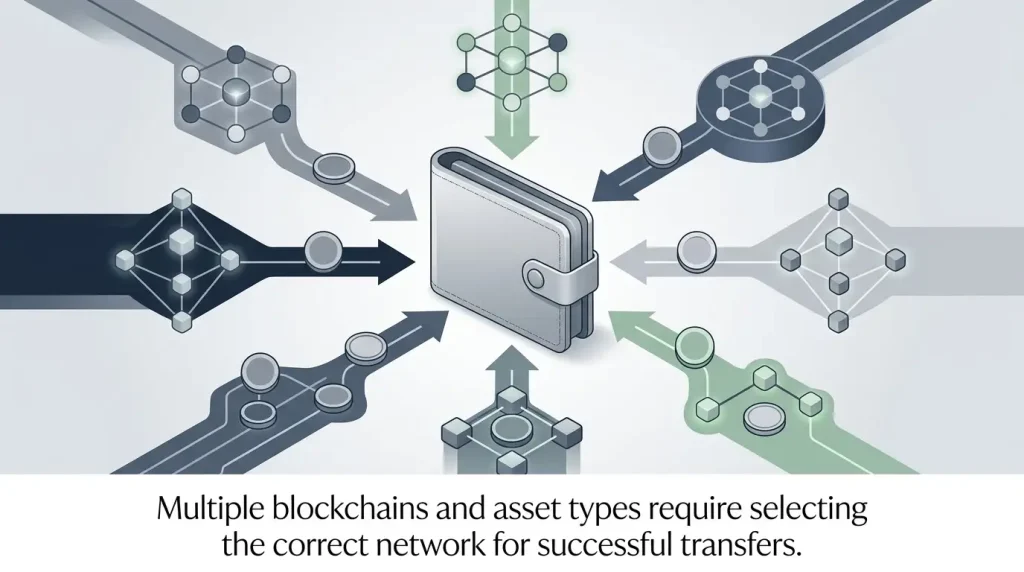
Lucky Block is built around cryptocurrency payments and its current Help Centre shows support information for Bitcoin, Bitcoin Cash, Litecoin, Dogecoin, Ethereum, Tether, Tron, XRP, Cardano, BNB, Solana, USDC, Shiba Inu, MATIC and other tokens. The practical detail is not only the coin name. Lucky Block’s Wallet displays an address after a cryptocurrency is selected, and its FAQ warns that sending below the displayed minimum or using an unsupported network can cause a deposit to be lost. The general FAQ also says minimum deposit and withdrawal values are shown per currency rather than as one universal amount. These are platform features, not proof of Australian access or payment eligibility. ACMA’s separate enforcement record against Lucky Block still matters for readers in Australia.
Table of Contents
- Lucky Block supports major coins, stablecoins and additional tokens through a currency-specific wallet
- The current crypto list is broader than Bitcoin and Ethereum
- Selecting the cryptocurrency reveals the payment details that matter for that asset
- A supported token name is not enough on its own to define the transfer route
- Lucky Block says it adds no payment fee, while network or provider costs can still apply
- Crypto support does not establish Australian casino access
- Verify the live wallet details instead of relying on the coin name alone
- Why the transfer network matters as much as the asset name
- Why copying old wallet details is a poor transfer habit in practice
- What Lucky Block crypto support does and does not tell you
Lucky Block supports major coins, stablecoins and additional tokens through a currency-specific wallet
Major assets
Current official support information includes BTC, ETH, LTC, DOGE and other widely used cryptocurrencies.
Stablecoins and altcoins
The Help Centre also shows USDT, USDC, TRX, XRP, ADA, BNB, SOL, SHIB and MATIC among supported or referenced assets.
Wallet rules
The deposit address and minimum depend on the selected cryptocurrency, so one generic crypto rule does not cover every transfer.
The current crypto list is broader than Bitcoin and Ethereum
Lucky Block’s current Help Centre lists Bitcoin, Bitcoin Cash, Litecoin, Dogecoin, Ethereum, Tether variants, Tron, XRP, Cardano, BNB, Solana, USDC, Shiba Inu and MATIC, with additional tokens also appearing in the table. The overall payment set therefore extends well beyond BTC and ETH.
That list should be treated as the current platform state rather than a permanent catalogue. Crypto payment menus can change as networks, tokens and provider integrations change. The useful question before a transaction is whether the asset and network you intend to use are currently displayed in the Wallet, not whether an older casino review once listed the coin.
| Group | Examples | What to verify in the Wallet |
|---|---|---|
| Major coins | BTC, BCH, LTC, DOGE, ETH | Selected asset, destination address and current minimum. |
| Stablecoins | USDT, USDC | The specific network or version shown for the transfer. |
| Other networks and tokens | TRX, XRP, ADA, BNB, SOL, SHIB, MATIC and others | Whether the chosen network is supported at the time of deposit or withdrawal. |
Selecting the cryptocurrency reveals the payment details that matter for that asset
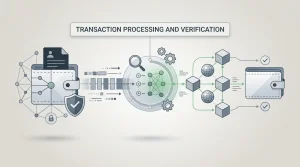
The official Help Centre says a user opens the Wallet and chooses a preferred cryptocurrency to reveal its deposit address. Funds can then be sent from a crypto wallet or third-party application. Lucky Block also describes a Buy Crypto tab that can be used to purchase cryptocurrency with a credit card.
The currency-specific design is more important than it first appears. The FAQ does not publish one universal minimum deposit or withdrawal across every asset. Instead, it says the applicable minimum is shown after the selected cryptocurrency is opened in the Deposit or Withdraw tab. This means a comparison based on one minimum figure can easily become misleading if it actually belongs to only one coin.
The main Lucky Block payments guide places that wallet flow alongside withdrawal timing and fees. The focus here is narrower: which assets are supported and what a crypto user needs to verify about the transfer route.
A supported token name is not enough on its own to define the transfer route
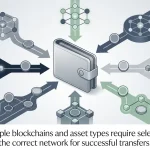
Some cryptocurrencies and stablecoins can exist across different networks. Lucky Block’s support material pairs its asset information with network and confirmation details. Exact confirmation requirements can change, so the network shown for the selected asset at the time of the transaction is the relevant route.
The more durable decision rule is to use the network shown for the selected asset at the moment of the transaction. A wallet address that is valid for one chain should not be assumed to work for another. Lucky Block’s own warning about unsupported networks makes that a material part of using its crypto payment flow, not a minor technical detail.
For withdrawals, network confirmation is only one layer. The dedicated Lucky Block withdrawals guide covers the current average payout wording, team review window and verification considerations that can sit around the blockchain step.
Lucky Block says it adds no payment fee, while network or provider costs can still apply
The current Help Centre states that Lucky Block does not charge deposit or withdrawal fees. It also says provider or mining fees may apply depending on the payment method. In crypto terms, this means the casino’s own fee policy and the cost of moving assets on a blockchain are separate parts of the transaction.
Minimums are asset-specific. The FAQ tells users to select the cryptocurrency in the Wallet to see the current deposit or withdrawal minimum. Lucky Block does not publish one universal crypto minimum in AUD or another fiat currency, and a live cryptocurrency value can move independently of the platform’s minimum setting.
For comparison purposes, that makes the most useful crypto fields the current asset list, supported network, displayed minimum and any external transfer cost. A long coin list is helpful, but it does not replace those transaction-specific details.
Crypto support does not establish Australian casino access
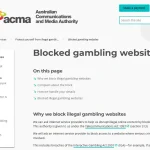
Lucky Block’s cryptocurrency features are general platform facts. They should not be read as an Australia-specific payment invitation. ACMA found that Lucky Block had provided prohibited and unlicensed regulated interactive gambling services to customers physically present in Australia and later requested Australian ISPs to block Lucky Block.
This distinction is especially important with crypto because payment technology can operate independently of local gambling authorisation. A service can support a large set of assets without that support resolving the separate regulatory question. The coin, wallet and network information therefore does not establish that Australian users are eligible to deposit, withdraw or open an account.
Verify the live wallet details instead of relying on the coin name alone
- Confirm the cryptocurrency is currently available in the Wallet.
- Use the network or token version displayed for that asset rather than assuming another chain is interchangeable.
- Check the current per-currency minimum before sending a deposit or requesting a withdrawal.
- Separate Lucky Block’s own fee policy from provider or mining fees.
- Keep Australian regulatory access separate from the platform’s technical ability to handle cryptocurrency.
Why the transfer network matters as much as the asset name
A wallet can support a familiar cryptocurrency while still requiring a specific transfer route. The deposit address, network and any displayed payment fields belong together. Sending an asset through an incompatible route can create a different problem from choosing an unsupported coin, so the practical check is not complete until both the asset and the network information agree with the destination shown in the wallet.
Stablecoins make this distinction especially easy to miss because the same asset name can be associated with more than one blockchain environment. Lucky Block’s currency-specific wallet model is therefore a more useful guide than a generic list of supported tokens. The live wallet details are the place where the selected asset is connected to the transfer instructions that apply to it.
Network costs should also be separated from operator fees. Lucky Block says it does not add its own payment fee, but blockchain costs or provider charges can still affect the amount sent or received. Describing those sources separately gives a clearer picture than calling every supported cryptocurrency transfer fee-free.
Why copying old wallet details is a poor transfer habit in practice
Crypto payment details should be taken from the current wallet screen for the selected asset. Reusing an old address, an old network assumption or instructions copied from another currency can separate the transfer from the route the platform currently displays. The safer reading of Lucky Block’s currency-specific model is therefore procedural: select the asset first, then use the address and network information shown for that transaction context.
What Lucky Block crypto support does and does not tell you
Lucky Block publishes a broad crypto payment set that includes major coins, stablecoins and additional tokens, with asset-specific wallet details rather than one universal minimum. Network selection is part of the payment decision because an unsupported network or below-minimum deposit can create a loss risk. Those facts describe how the platform handles cryptocurrency, not whether casino access is authorised for an Australian reader. In Australia, the ACMA enforcement and blocking record remains a separate part of the assessment.