Lucky Block registration and KYC verification
 Available in AU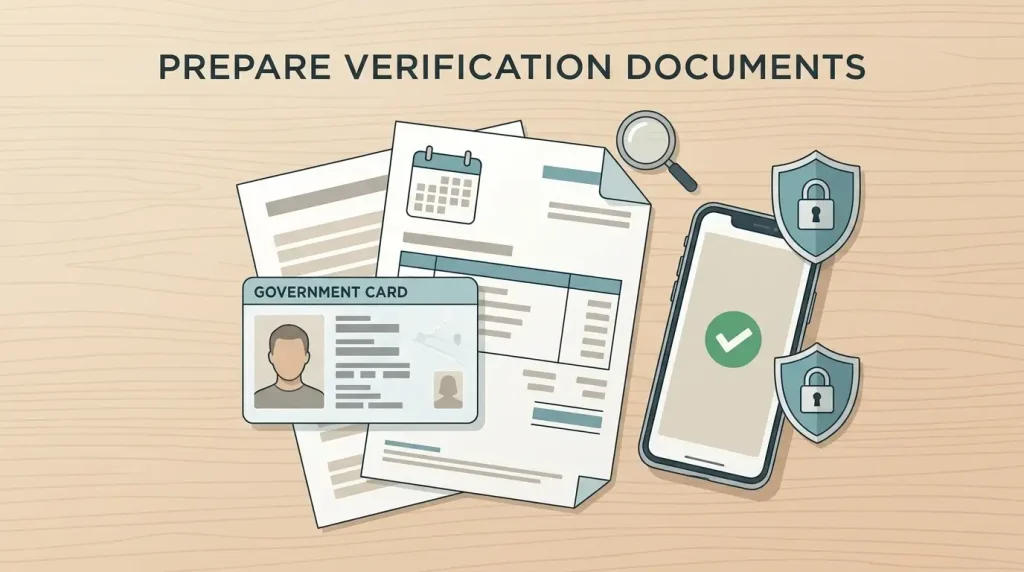
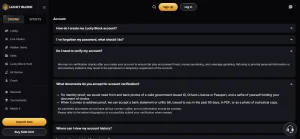
Lucky Block’s current Help Centre describes a general signup flow using an email address, username and password, followed by account checks that can request documentary evidence. For identity proof, the published examples are a valid government-issued ID, driving licence or passport, with front and back images where relevant, plus a selfie holding the selected document. For proof of address, Lucky Block currently lists a bank statement or utility bill issued in the previous 90 days. It also says submitted documents should show all four corners and have no information covered. These are current general KYC examples, not a promise that every account receives the same request or a statement that Australian registration is authorised. ACMA has taken enforcement action against Lucky Block in Australia, so the presence of a signup form and the KYC process should be assessed separately from Australian access rules.
Table of Contents
- The published verification checklist centres on identity, a selfie and recent proof of address
- Registration creates the account, while verification is a separate control that can follow
- Lucky Block currently asks for clear identity-document images and a matching selfie when verification is required
- Recency and legibility matter as much as the document category
- Verification can affect account access even when the payment method itself is fast
- KYC preparation is also a data-quality and privacy task
- A visible signup and KYC flow does not establish Australian authorisation
- Prepare the file quality as carefully as the document type
- Why document quality can matter before the review begins
- What to prepare for Lucky Block verification
The published verification checklist centres on identity, a selfie and recent proof of address
Identity
Government-issued ID, driving licence or passport are the current examples in the Help Centre.
Selfie
Lucky Block says identity proof includes a selfie holding the chosen identity document.
Address
A bank statement or utility bill issued in the past 90 days is listed as proof-of-address evidence.
Registration creates the account, while verification is a separate control that can follow
Lucky Block’s Help Centre describes the general account creation process as providing a valid email address, choosing a username and password, and agreeing to the site’s Terms and Conditions. That tells you what the public account flow asks for at the initial stage. It should not be read as evidence that the service is approved for every country from which the form can be reached.
The same Help Centre treats verification as a later account-control process. It says checks can be run after account creation to support fair play and controls against fraud, money laundering and underage gambling. It also states that refusing to provide requested personal information or documentary evidence can result in temporary or permanent suspension of the account.
A short registration form does not mean KYC has been completed, and an account that has been opened can still face document requests before later account activity is cleared. The practical issue is not simply how many fields appear on the signup screen, but what evidence may be required once the operator asks for verification.
The Lucky Block Australia guide places that general account process beside the Australian regulatory record, so the existence of a signup route is not used as a proxy for local authorisation.
Lucky Block currently asks for clear identity-document images and a matching selfie when verification is required
The current Help Centre lists a valid government-issued identity document, driving licence or passport as identity-proof examples. It says front and back photos are needed where applicable and asks for a selfie in which the user is holding the chosen document. The page also says all four corners of submitted documents should be visible and that information should not be covered.
Those details matter because a rejected upload can be caused by document quality rather than the type of document alone. A cropped edge, unreadable information or an image that does not show the requested side can create an avoidable second submission. The safest interpretation is to follow the live upload instructions shown in the account at the time of verification, because the Help Centre provides general accepted-document examples rather than a guarantee that one document type will satisfy every case.
| Verification purpose | Examples currently listed | Presentation detail |
|---|---|---|
| Identity | Government-issued ID, driving licence or passport | Front and back images where relevant; all four corners visible. |
| Identity match | Selfie holding the chosen identity document | The Help Centre includes this as part of identity proof. |
| Address | Bank statement or utility bill | Issued in the previous 90 days and in PDF or a photo of a physical copy. |
Recency and legibility matter as much as the document category
For proof of address, Lucky Block’s current Help Centre lists a bank statement or utility bill issued to the user within the past 90 days. It accepts the evidence as a PDF or as a photo of a physical copy. The same visible-corners and uncovered-information guidance applies to the submitted material.
A 90-day age rule is a specific current requirement, so it should be treated as live information rather than a permanent assumption. If the account upload screen gives a newer or more specific instruction, that live instruction is the more relevant one for the actual verification request.
For document preparation and verification checks, see the Lucky Block verification guide. KYC can follow account creation and can affect later account activity.
Verification can affect account access even when the payment method itself is fast
Lucky Block’s payment guidance separately advertises fast cryptocurrency payouts, but withdrawal speed and account verification are not the same metric. A payment rail can be technically quick while an account still needs review or documents. That is why comparing only a headline payout time can miss the account-control step that matters before funds are released.
The Lucky Block withdrawals guide explains the current published payout timing, review window and wallet-specific minimums. From a KYC perspective, the useful point is simply that a withdrawal request can intersect with verification, so documents should be readable and current before a user relies on a rapid-payment claim.
Lucky Block’s Help Centre says refusing requested personal information or documentary evidence can result in suspension. It does not publish one fixed verification completion time that applies to every case.
KYC preparation is also a data-quality and privacy task
Identity checks involve sensitive personal information. Lucky Block’s Help Centre asks for clear images and an uncovered document, so verification documents should be submitted only through the operator’s documented account channel. This editorial site has no account-verification upload facility.
Before uploading, check that the account request itself identifies what is needed and that the document falls within the stated recency and format rules. Keep your own copy of what was submitted and avoid sharing verification files with anyone who is not part of the operator’s documented process. Those habits do not change the KYC requirement, but they reduce avoidable confusion about which file was provided and where.
A visible signup and KYC flow does not establish Australian authorisation
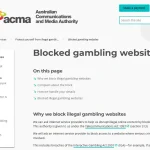
For Australian readers, the account mechanics need to be read beside the regulator’s position. ACMA’s current Interactive Gambling Act guidance lists online casinos among the banned online services that providers must not offer to people in Australia. ACMA has also specifically found Lucky Block in breach for prohibited and unlicensed regulated interactive gambling services supplied to customers physically present in Australia and requested Australian ISPs to block the service.
That information does not change what Lucky Block’s general Help Centre says about email, usernames or identity documents. It changes how those features should be understood in an Australian context. A functioning registration page or KYC form is a technical account feature, not proof that an online casino is authorised to provide the service locally.
Prepare the file quality as carefully as the document type
- Use a current accepted identity document shown in the live verification instructions.
- Capture the front and back where requested and keep all four corners visible.
- Be ready for a selfie holding the selected identity document.
- For address proof, use a bank statement or utility bill that fits the current 90-day rule.
- Submit through the operator’s documented verification channel, not an unrelated third party.
- Do not assume there is one fixed KYC completion time for every account.
Why document quality can matter before the review begins
The document category is only one part of a verification submission. A current identity document can still be difficult to assess if the image is cropped, blurred or reflective, and address evidence can lose its value if the required details are not readable. Preparing clear, complete files reduces avoidable friction without changing what the operator may ultimately ask to verify.
What to prepare for Lucky Block verification
The current public checklist is concrete: a government-issued identity document, driving licence or passport, a selfie holding the chosen document, and recent address evidence such as a bank statement or utility bill. Clear images and visible document edges are part of the published guidance, while one universal KYC completion time is not. The account flow should therefore be judged on the quality and recency of the requested evidence rather than on signup speed alone. For Australian readers, keep that process separate from local authorisation: ACMA’s enforcement record remains the relevant regulatory context even when the account screens themselves are technically accessible.