Lucky Block responsible gambling tools and Australian safeguards
 Available in AU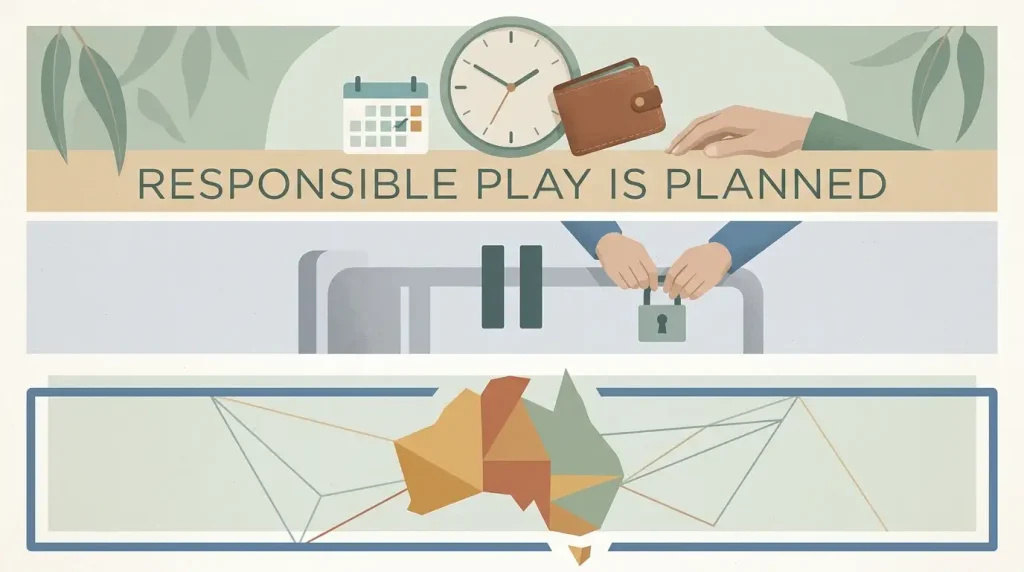
Lucky Block’s current Responsible Gambling policy offers an operator-level self-exclusion route through support, with a selected period from 6 months to 5 years. Its policy also recommends setting personal deposit and time limits, taking breaks and using only one account, but the public policy presents those points as user guidance rather than confirming built-in account limit controls. BetStop is a different mechanism: ACMA says it covers Australian licensed online and phone wagering providers, not every offshore casino. For an Australian reader, the useful distinction is between the brand’s own controls, Australia’s licensed-wagering self-exclusion system and independent gambling-harm support.
Table of Contents
- Three layers of protection should not be treated as interchangeable
- Lucky Block's public policy mixes practical advice with a formal self-exclusion route
- Use the Lucky Block route when the objective is to stop access to that operator
- BetStop covers Australian licensed online and phone wagering providers
- A softer limit and a formal exclusion solve different problems
- Gambling-harm support does not depend on an operator account
- Match the action to the level of protection you need
- Why operator controls and Australian safeguards need separate labels
- Which safeguards apply in which setting
Three layers of protection should not be treated as interchangeable
| Mechanism | Who runs it | Scope | Key practical point |
|---|---|---|---|
| Personal limits and breaks | The individual | Your own gambling behaviour | Lucky Block recommends setting personal deposit and time limits and taking breaks, but its public policy does not describe those recommendations as automated account controls. |
| Lucky Block self-exclusion | Lucky Block | The operator’s gambling services | The published policy says a request can be made through support for 6 months to 5 years. |
| BetStop | Australian national register | Australian licensed online and phone wagering providers | ACMA says registered people are excluded across covered providers in one process. |
| Independent help | Australian support services | Gambling-harm counselling and support | The National Gambling Helpline and Gambling Help Online sit outside the casino operator. |
Lucky Block’s public policy mixes practical advice with a formal self-exclusion route
The current Lucky Block policy recommends deciding in advance how much money is affordable for entertainment, setting a time limit, avoiding attempts to chase losses and taking breaks when concentration drops. It also advises maintaining one account so that time and spending are easier to track. These points are useful as behaviour prompts, but wording matters: the policy says users should set these limits for themselves. It does not, on the public page checked for this article, describe a dashboard tool that automatically enforces a deposit cap or session timer.
The formal part of the policy is self-exclusion. Lucky Block says users who want to stay away from gambling can contact support and specify a self-exclusion period between 6 months and 5 years. The policy says the selected period will not be undone and prohibits creating a new account during it. That makes self-exclusion materially different from a personal reminder to stop after a certain amount of time or money.
The same policy states that the service is for people aged 18 or older and that identity and age verification checks may be performed. Age checking and self-exclusion are both protection measures, but they solve different problems: one is about access by minors, while the other is about an adult choosing to stop gambling.
Use the Lucky Block route when the objective is to stop access to that operator
An operator-level self-exclusion request is most useful when the immediate objective is to close off access to that operator’s gambling services. Lucky Block’s policy directs the request through support and asks the user to specify a period. Because the policy gives a defined minimum and maximum duration, it is stronger than simply deciding to take a break without formally asking the operator to enforce one.
Keep a copy of the request and the operator’s acknowledgement. A written record makes the chosen period and date clear if there is later uncertainty about when the restriction began. The separate Lucky Block support guide explains the currently published support and complaints channels and how to keep operator-level support separate from Australian regulatory questions.
BetStop covers Australian licensed online and phone wagering providers
ACMA describes BetStop as the National Self-Exclusion Register for Australian licensed online and phone wagering services. A person can register for a period from 3 months to a lifetime. ACMA says covered providers must close the person’s betting accounts and must not let that person place bets, open a new account or receive marketing messages while the exclusion applies.
That scope is precise and should remain precise. BetStop is a licensed-wagering safeguard, not a universal block across every gambling website on the internet. ACMA also says BetStop operates separately from other self-exclusion programs and does not replace the obligation on wagering providers to offer their own self-exclusion option. In other words, national self-exclusion and a provider’s own exclusion process can coexist without being the same mechanism.
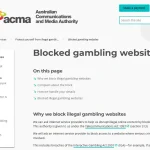
BetStop covers Australian licensed online and phone wagering providers. Lucky Block has an ACMA enforcement record describing prohibited and unlicensed services, so coverage should not be assumed. The online casino Australia legal guide explains the distinction between licensed wagering and prohibited online casino services.
A softer limit and a formal exclusion solve different problems
A self-set budget or time limit can be useful before gambling starts, because it defines a boundary while the decision is still deliberate. Its weakness is also obvious: a personal rule depends on the person continuing to follow it. The Lucky Block policy’s advice about deposit limits, time limits and breaks belongs in this category unless the operator separately confirms a technical account control.
Formal self-exclusion is designed for a different situation. It transfers part of the enforcement to the operator or, within BetStop’s licensed Australian wagering scope, to a national system that covered providers must check and respect. Someone who has decided that access itself is the problem should not treat a simple reminder or spending plan as equivalent to an exclusion request.
The strongest practical approach is to name the objective first: reduce time or spending, stop access to one operator, exclude from Australian licensed wagering providers, or get independent help for gambling harm. Once the objective is clear, the matching mechanism is easier to identify without overstating what any one tool can do.
Gambling-harm support does not depend on an operator account
ACMA lists the National Gambling Helpline on 1800 858 858 and Gambling Help Online as free, professional and confidential support resources available 24 hours a day. These services are independent of Lucky Block and are relevant when the concern is gambling harm, a need to stop, or support for someone affected by another person’s gambling.
That independence matters because counselling and harm support are different from resolving an account complaint. An operator can administer its own self-exclusion process, while an independent service can help with the wider behaviour, financial stress or family impact that may sit behind the decision to stop gambling. The two routes can be used for different purposes rather than treated as alternatives where only one is allowed.
Match the action to the level of protection you need
- For a personal spending boundary, set the amount before gambling and do not treat it as money that must be won back.
- For a personal time boundary, decide the session length before starting and take breaks rather than extending it after losses.
- For Lucky Block operator-level self-exclusion, use the published support route and keep the written acknowledgement.
- For exclusion across Australian licensed online and phone wagering providers, use BetStop rather than assuming a casino’s own self-exclusion creates the same coverage.
- For gambling-harm support, use the National Gambling Helpline or Gambling Help Online independently of any operator complaint.
Why operator controls and Australian safeguards need separate labels
An operator-level self-exclusion applies to the relationship with that operator, while BetStop is the national self-exclusion register for Australian licensed online and phone wagering providers. Those systems operate at different levels and should not be described as though one automatically covers the other. The distinction is especially important for an offshore online casino that sits outside the Australian licensed wagering framework described by BetStop.
Personal limits, time controls and a decision to stop gambling can still be useful regardless of which formal system applies. The practical question is what protection a person needs: a softer behavioural limit, an operator-specific exclusion, a national wagering exclusion, or independent gambling-harm support. Matching the tool to the problem is more useful than treating every responsible-gambling measure as the same kind of safeguard.
Safeguards cover separate settings and should remain clearly separated.
Which safeguards apply in which setting
Lucky Block’s current policy provides an operator-level self-exclusion route and recommends personal limits, breaks and one-account discipline. BetStop is broader in a different direction: it applies across Australian licensed online and phone wagering providers and has its own national rules. Independent Australian support services address gambling harm without depending on either system. The useful decision is therefore not which safeguard sounds strongest in isolation, but which setting it actually covers and whether that scope matches the protection needed.
Is Lucky Block legal in Australia? The ACMA record explained
Is Lucky Block legal in Australia? The ACMA record explained
Skip to content Lucky Block Australia GuideIndependent editorial information for Australian readers For Australian readers,...

Lucky Block games, slots and live casino
Skip to content Lucky Block Australia GuideIndependent editorial information for Australian readers Lucky Block's current...
Lucky Block payments, crypto deposits and withdrawals
Skip to content Lucky Block Australia GuideIndependent editorial information for Australian readers Lucky Block's Help...
Lucky Block app: mobile access and Home Screen setup
Skip to content Lucky Block Australia GuideIndependent editorial information for Australian readers Lucky Block's current...
Lucky Block bonuses and promotion terms
Skip to content Lucky Block Australia GuideIndependent editorial information for Australian readers Lucky Block's public...
Lucky Block support, complaints and Australian protection context
Skip to main content Lucky Block Australia Guide Lucky Block's current Help Centre says customer...
Lucky Block registration and KYC verification
Skip to content Lucky Block Australia GuideIndependent editorial information for Australian readers Lucky Block's current...